Showing posts with label Articles. Show all posts

Saturday, 5 May 2012

Astrophotography Workshop with William Chin

The sky is clear on the night of May 3rd, a sign of great luck to the budding astrophotographers who is eager to record the celestial portraits the sky has in store for us.


Photo Credits to John Lim.

With the leadership of Malaysia's ace astrophotographer William Chin, stargazers Chrono, Simpson, Kenza Chen and John Lim starts snapping away in <30 secs exposures to freeze the stars in motion.
William Chin Pro Tip : Focusing is all-important in photographing the stars. If you don't focus properly, your picture is shit. How to focus on the stars?
  1. Turn off the AutoFocus, the Image Stabilizer.
  2. Point your camera to a streetlight far away, or if any bright stars is visible, to the bright star. 
  3. Turn on LiveView (or any other programmes that makes the scene visible on the LCD) and focus manually until you get a sharpest dot for the streetlight.
  4. For better results, zoom in - and focus again until you get a sharpest dot. 
  5. When you are happy with the focus, point to the stars - and DO NOT touch the focus anymore. If you touch it the focus will go off and you will have to redo it. 

This is an example of a star shoot. The blue background which makes it looks like daylight is caused by a combination of factors - the fact that it was almost Full Moon at that time, some light pollution and the Custom White Balance setting in the camera. It can be corrected in Photoshop. More details about that soon.
William Chin Pro Tip : Exposures without guidance (just tripod and DSLR) are best in 20-25 seconds for stars near the North or South (e.g. Big Dipper or Southern Cross), and 10-15 seconds for stars near the equator (for Malaysia, it's the stars directly above our heads), for example the Zodiacs - Scorpio, Sagittarius, and others such as Orion and Canis Major. 
This picture features the Big Dipper! Can you spot it? :-) This was taken with Canon 40D, f/3.5, exposure 15s at ISO 400. Same for all the other pictures below.


Centaurus and the Southern Cross! 


This super large one features the most easily spottable constellations Scorpio and Sagittarius - as well as the most heavy traffic observed in our skies - the Milky Way! While the stars may be little in others parts of the sky, along the Milky Way Expressway the stars just keep on going, and the number of clusters and nebulae inside are too damn high!

Do you see a faint cloud-like thing at the centre of the picture? That's the Milky Way!!

Well that's about it for the brief astrophotography session with William Chin at (undisclosed location), Kajang! We look forward to more sessions with him!

Saturday, 21 April 2012

Lyrids and the Stargazer Society


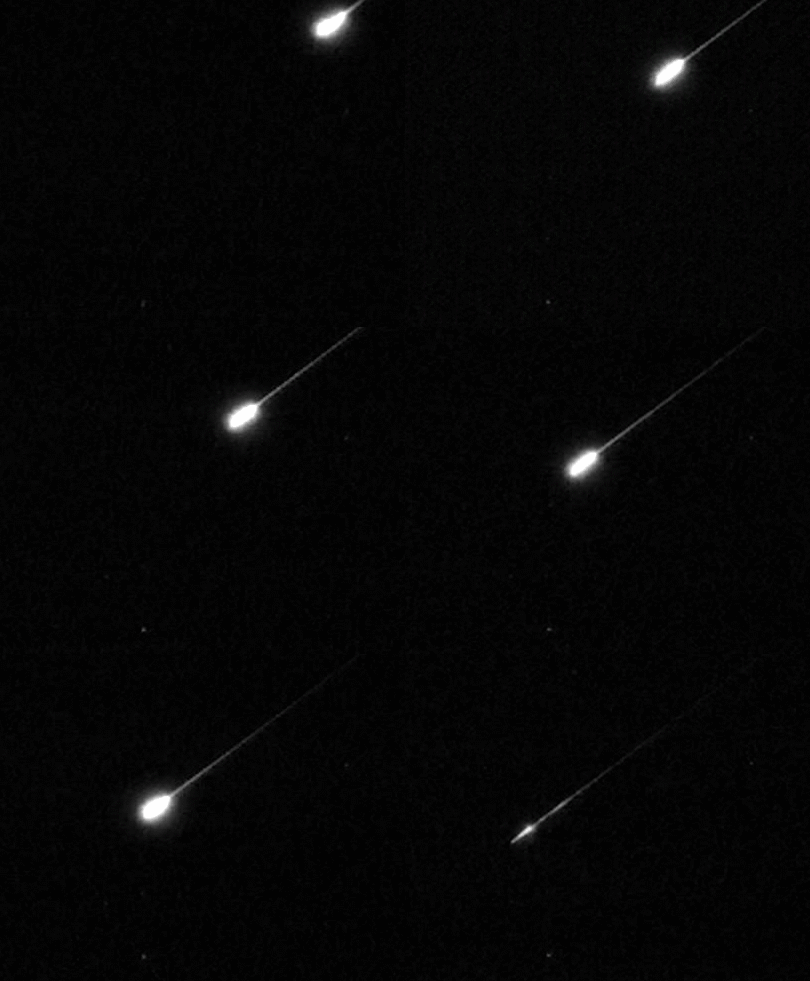
It's time for the meteor showers of spring, the Lyrids! This year the Lyrids are good to see in a fully moonless night. Lyrids are moderate showers unlike the 'Grand Showcases' of the Perseids and the Geminids. However, just step out and look out for some meteors - maybe you can get a glimpse of a massive fireball!

YOU DO NOT NEED A TELESCOPE TO ENJOY AT A METEOR SHOWER. Much patience is needed though! The best way is to go out to the playground, find a spot with the least streetlights, open your sleeping bag and just lie down and soak in the nightly dew while waiting for a meteor to streak across the sky!


Lyrids Watch 2011 in the University of Nottingham Malaysia Campus

Our first collaboration event with another university! *nostalgia*
10 Stargazer Society members went all the way to Semenyih to bring the joy of stargazing to students in UNMC. (despite a few weeks from edexcel exams lol) It was an unforgettable experience, although the clouds set in for more than half of the nights but many people still had the chance to see Saturn and other astronomical objects through the 3 telescopes at the event - by Ms. Teoh and Ms Yap and Zhenyu Law. (the one in the picture below!)


Meteor showers are one of the best experiences in your life that you shouldn't miss! Go out and hunt them now! :)


Tuesday, 17 April 2012

The Cosmic Perspective by Dr. Neil deGrasee Tyson


The Cosmic Perspective
April 2, 2007 in the Read section
Universe: The 100th Essay

by Neil deGrasse Tyson

From Natural History Magazine, April 2007
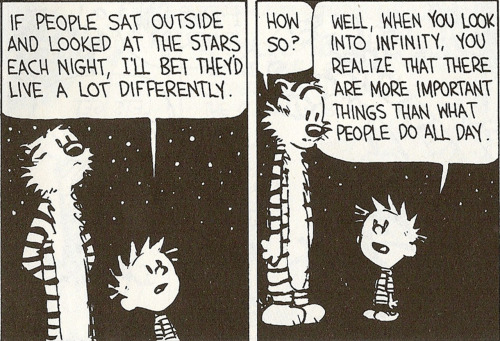
Of all the sciences cultivated by mankind, Astronomy is acknowledged to be, and undoubtedly is, the most sublime, the most interesting, and the most useful. For, by knowledge derived from this science, not only the bulk of the Earth is discovered . . . ; but our very faculties are enlarged with the grandeur of the ideas it conveys, our minds exalted above [their] low contracted prejudices.
— James Ferguson, Astronomy Explained Upon Sir Isaac Newton’s Principles, And Made Easy To Those Who Have Not Studied Mathematics (1757)

Long before anyone knew that the universe had a beginning, before we knew that the nearest large galaxy lies two and a half million light-years from Earth, before we knew how stars work or whether atoms exist, James Ferguson's enthusiastic introduction to his favorite science rang true. Yet his words, apart from their eighteenth-century flourish, could have been written yesterday.
But who gets to think that way? Who gets to celebrate this cosmic view of life? Not the migrant farmworker. Not the sweatshop worker. Certainly not the homeless person rummaging through the trash for food. You need the luxury of time not spent on mere survival. You need to live in a nation whose government values the search to understand humanity's place in the universe. You need a society in which intellectual pursuit can take you to the frontiers of discovery, and in which news of your discoveries can be routinely disseminated. By those measures, most citizens of industrialized nations do quite well.

Sunday, 11 March 2012

Clash of the titans

Okay, not the Saturn’s moon Titan, but the titans in terms of brightness in our night sky. This March, witness the glory of the geometry of the solar system as Jupiter and Venus gets really close from the Earth’s point of view!
blog 2

Sunday, 9 October 2011

The Space Shuttle

The space shuttle has been a fantastic vehicle. It is unlike any other thing that we've ever built. Its capabilities have carried several hundred people into space.
Robert Crippen

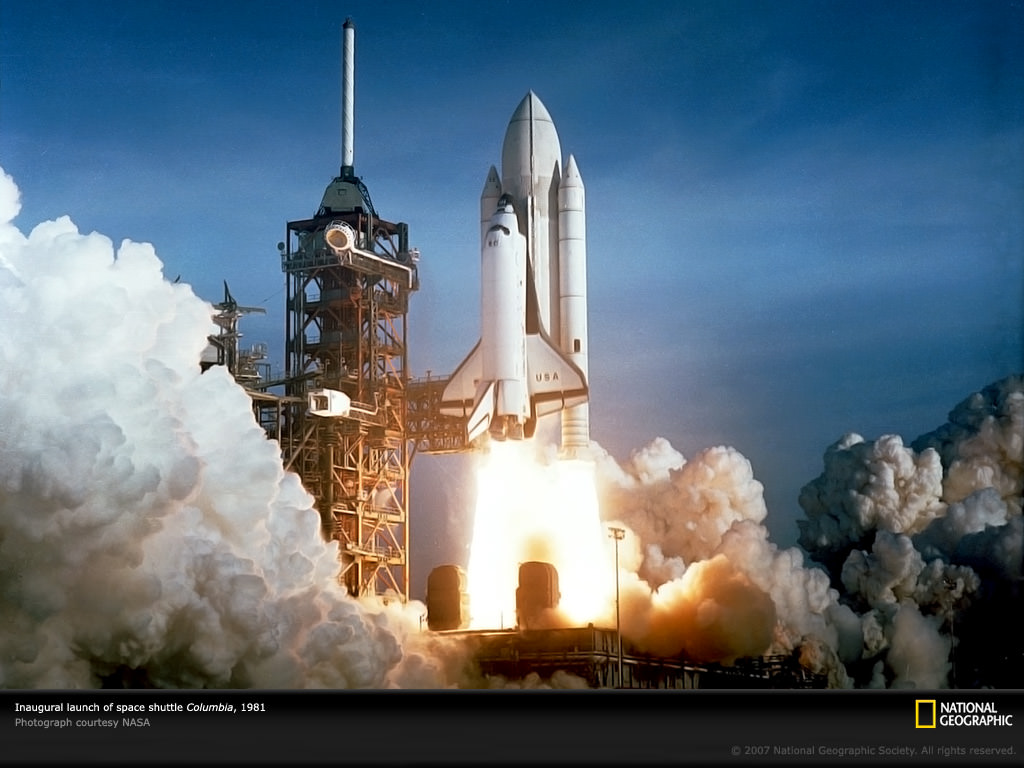
The Space Shuttle Program by NASA, held from 1981 to 2011, was a defining programme that shaped human space endeavours for the last 30 years. Everyone, every kid is fascinated by the sight of the space shuttle that has dutifully brought humans up to the Mir Space Station, and subsequently the International Space Station to conduct scientific research, experiment long term living in space and providing the groundwork for future, deeper explorations.

On Thursday, our beloved club treasurer Yeang Ching, under her own initiative, offered to share with the club about the story of the space shuttle.

06102011573 

Pic shown is the orbiter #0 Enterprise, named after the legendary Star Wars spaceship. It is #0 because it is a prototype and it was never used for real space exploration. The first one to do so is Columbia instead.

Yeang Ching’s main topic is the materials used to build the space shuttle, which is very interesting on its own. Do you know which part of the Space Shuttle gets the hottest during atmospheric re-entry? And what are the few substances that are able to stand such crazy temperatures and are used to line the Space Shuttle’s Exterior? Do you know what are the names of the booster rockets attached to the Space Shuttle? Do you even know how many orbiters were there? She knew it all! :P

Ok well, first off here’s a chronology of what happens during each flight : File:Space shuttle mission profile.jpg

When people have asked if I'd like to go in the Shuttle, I said you don't get to fly it, except for landing, which I'd love to do. I wouldn't go unless I could command it.
Wally Schirra

The most dangerous part of the flight, other than liftoff, is the re-entry part where the orbiter can face temperatures of up to 3000 degrees! This is due to friction with the Earth’s atmosphere. Sorta like having your own mother killing you.

As you can see the whitest and hottest part is the edge of the wings. Special protections are applied to these areas so that the orbiter would not melt. There you go!

File:ShuttleTPS2-colored.png

click for larger image

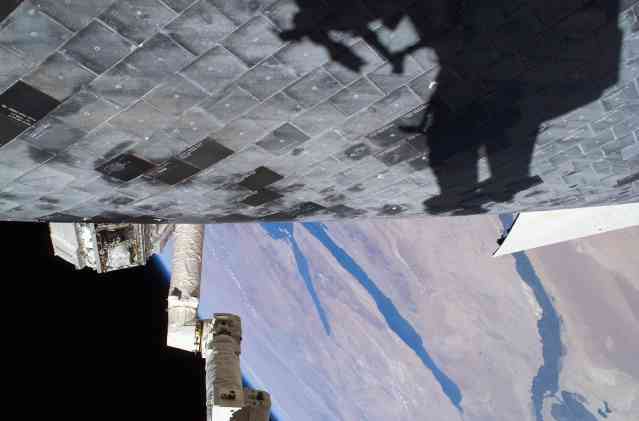
One of the more famous tiles are the High Temperature-Reusable Surface Insulation (HRSI) tiles which are black in colour and lines the bottom of the orbiter. In this pic a spot check is done on Discovery’s heat tiles while it was docked to the ISS. The tiles are not all black, the one with faded colours are the old tiles. 

Enclosed is a diagram of the materials for the HRSI tiles. Someone commented that it was oddly similar to mahjong tiles lol.

File:Space Shuttle (HRSI tile).png

I think the Space Shuttle is worth one billion dollars a launch. I think that it is worth two billion dollars for what it does. I think the Shuttle is worth it for the work it does.
Pete Conrad

Other than that, Yeang Ching has also presented on the launch system of the Space Shuttle!

06102011575

In the pic, the orange big rockets is known as the External Fuel Tank, and the twin small rockets beside are the Solid Booster Rockets! The club members remembers this well as it cost them a free ice-cream, except for Daisuke! :D

Lastly, a talk on the thermal protection system of the Space Shuttle is not complete with the tragedy of the Columbia Orbiter in 2003. This was due to a heat tile that happened to dislodge during reentry and hit the shuttle’s left wing, causing a puncture and allowed hot gases from the reentry to enter the wing and disintegrate the wing from within, leading to eventual loss of control and breakup of the shuttle. Due to this incident, space shuttle was put on hold for two years, similar to the Challenger incident and improvements were made on the three remaining orbiters, Discovery, Atlantis and Endeavour.

That is all for Yeang Ching’s sharing session! Clap clap clap! And congrats to the winners of the quiz session, Priscilla, Daisuke, Yee Lin, Yi Kun and Chee Meng who won a free ice cream to be redeemed on the Oct 29th Sidewalk Astronomy Night!

298279_293330184011854_137865269558347_1259854_632035265_n

Well then, see ya next meeting!

The Twilight Zone' wasn't around with the kids. They think going up in space is neat. Within their lifetime, there will be paying passengers on the shuttle.
Christa McAuliffe (teacher astronaut who perished on the Challenger incident)

Friday, 5 August 2011

Sungazing preview

CIMG9074

It was a cloudy evening, just managed to get decent observations and a few pics using my telescope Astroview 100mm and a homemade solar filter.

CIMG9071CIMG9072
CIMG9080

Notice the dark spot on the lower left part of the Sun…. it is a sunspot!

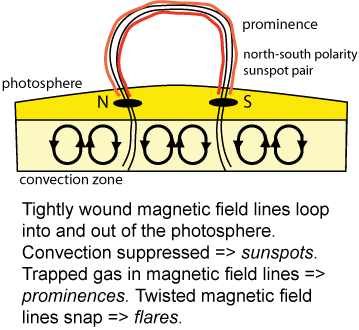
What are sunspots? Sunspots are regions on the Sun that are cooler than the other parts of the sun. It is a temporary phenomena that occurs on the photosphere! The reason behind it are intense magnetic activity, which inhibits convection (transfer of heat) and hence forming areas of reduced surface temperature. It serves as an indication of intense solar activities, like solar flares and CME’s.


What is a photosphere? What are solar flares? What are CME’s? Don’t worry, we’ll be dealing with heliophysics (Studies of the sun) soon, and I do hope that we can also observe sunspots at college too! .

CIMG9082CIMG9087

Based on the sizes I think it’s most probably sunspot no. 1263. Yes its length is about 10 Earths! Why the orientation is different? It is caused by the telescope no less… refractors generally have horizontally flipped and upside down images, due to the laws of optics no less! I think there’s also one more sunspot below there, Mr. 1261.... or just a shadow of a cloud. Hmm.

Stay tuned to Stargazer Society MCKL to learn more about the glorious Sun!


Image credits : NASA SDO observatory, astronomynotes.com
Locations of Site Visitors